
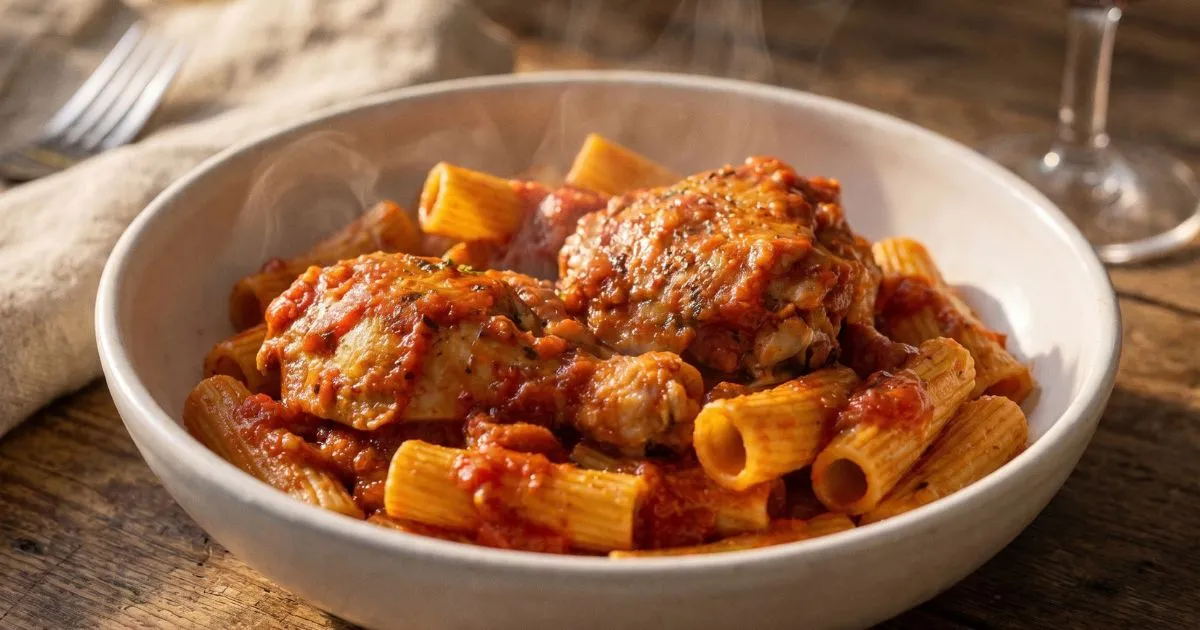
Chicken and Pasta in Tomato Sauce: A Simple Weeknight Recipe
Table of Contents
Chicken and Pasta in Tomato Sauce
Busy weeknights are perfect for a hearty, satisfying dinner made with everyday pantry staples . This chicken and pasta in tomato sauce brings tender chicken and pasta coated in garlicky tomato sauce to the table, all without cream.
You can keep the red pepper flakes mild or add more for extra warmth.Pasta water is the starchy liquid reserved after boiling pasta. It helps thin the sauce and allows it to coat the noodles more evenly.
Key Takeaways
- Serves four for a weeknight meal.
- Uses a cream-free tomato sauce.
- Lets you adjust the spice level.
- Works with several short pasta shapes.
- Includes chicken breast, mushrooms, and spinach.
The ingredient choices are flexible, but the measured recipe gives you a clear starting point. You’ll find the full list for four servings next.
What You Need for Chicken and Pasta in Tomato Sauce
Most ingredients for this dinner are easy to find in a standard grocery store. Fresh garlic and freshly grated Parmesan bring the clearest flavor, while canned tomatoes keep the sauce simple.
Olive oil and butter create the cooking base, and salt and black pepper are adjusted to taste. Begin with the recommended amounts, then fine-tune the seasoning to your liking.
Olive oil and butter form the cooking base.Season with salt and freshly ground black pepper to your liking.
Keep the pasta and chicken together as one shopping group.Gather the sauce ingredients separately so you can double-check everything before you start cooking.
- Pasta and chicken: 9 ounces penne; 12 ounces boneless, skinless chicken breast, cut into 1-inch pieces.
- Cooking fats: 1 tablespoon olive oil; 1 tablespoon butter.
- Vegetables: 1 medium onion; ½ pound sliced mushrooms; 2 cups baby spinach.
- Aromatics and herbs: 4 garlic cloves, minced; ½ teaspoon red pepper flakes; 1 teaspoon dried basil; 1 teaspoon dried oregano.
- Tomato and cheese: 2 tablespoons tomato paste; two 14-ounce cans crushed tomatoes; ⅓ cup grated Parmesan.
Set out salt and black pepper, then add each to taste as the dish comes together. Use fresh garlic rather than jarred garlic for a brighter aroma. Freshly grated Parmesan melts into the sauce more smoothly than many pre-grated blends.
The list gives you the quantities for four portions without extra ingredients to buy. You can adapt the pasta shape and chicken cut, then choose the options that best suit your desired texture.
Which Pasta and Chicken Work Best?
Choose penne when you want tomato sauce to cling to each bite. Its short tubes hold sauce inside and around the pasta, giving you a balanced forkful.
Penne is the recipe’s starting shape, but several pasta types work well. The best choice depends on the texture you like and what you already have in the pantry.
Pick a pasta shape that clings to the sauce
Penne has a firm, easy-to-eat shape that mixes well with chicken pieces and vegetables. Other short pasta shapes, such as rotini or rigatoni, offer a similar sauce-holding texture.
Spaghetti also works, but long noodles create a different bite than short pieces. Whole-wheat pasta is another option if you prefer its firmer texture and deeper grain flavor. Check the package directions, since cooking times vary by shape and brand.
For a smooth finish, cook pasta just until al dente, meaning tender with a slight firmness at the center. The pasta continues to soften slightly as you toss it with the hot sauce.
Pick chicken breast for quick cooking or thighs for tenderness
Boneless, skinless chicken breast cooks quickly, so it suits a weeknight meal. Chicken breast can turn dry if it cooks too long, especially after you add it to simmering sauce.
Boneless, skinless chicken thighs remain tender and juicy, even with longer simmering. Choose thighs when tenderness matters most or when you want a little more room for error as the sauce cooks.
The recipe uses dried basil and dried oregano, but Italian seasoning can stand in for both. This table shows what changes with each swap.
| Starting choice | Alternative | What changes | Best fit |
| Penne | Another short pasta | Similar sauce-holding texture | Use what is on hand |
| Penne | Spaghetti | Long noodles rather than short pieces | When that is the pantry option |
| Chicken breast | Boneless, skinless thighs | Thighs stay juicier during simmering | When tenderness matters most |
| Dried basil and oregano | Italian seasoning | One mixed dried-herb option | When that blend is available |
Once you settle on a pasta shape and chicken cut, the cooking order keeps both from overcooking. Start with the pasta and chicken, then build the sauce in the same pan.
How to Make Easy Chicken and Pasta in Tomato Sauce
Start a large pot of salted water while you gather the pan and ingredients. Get the pasta going first, then cook the chicken and sauce as the noodles boil.
The listed prep time is 10 minutes, and cook time is 25 minutes. Cook chicken to an internal temperature of 165°F for safety.
Boil the pasta and brown the chicken
- Bring a large pot of salted water to a boil. Add the penne and cook it al dente according to the package directions.
- Reserve 1–2 cups of pasta water before draining the noodles. Drain the noodles, then set them aside while you prepare the sauce.
- Warm the olive oil and butter in a large skillet over medium heat. Add the chicken pieces and cook for 5-6 minutes, turning them as they brown.
Let the pasta cook while you work on the chicken and sauce. This timing helps the two parts finish close together, so the noodles do not sit too long.
Prepare the tomato sauce in the same skillet
- Add the onion and mushrooms to the skillet with the chicken . Cook for 3-4 minutes, stirring as the vegetables soften.
- Stir in garlic, red pepper flakes, dried basil, and dried oregano. Cook for about 1 minute, until the garlic becomes fragrant.
- Stir in the tomato paste, then add the crushed tomatoes .Stir everything together, bring the sauce to a gentle simmer, and let it cook for 5 minutes.
- Check the chicken with a food thermometer. If it has not reached 165°F inside, keep cooking it in the sauce until it reaches that temperature.
Cooking tomato paste with the other ingredients helps give the sauce more flavor. The chicken stays in the same pan, so its browned bits season the tomatoes as they simmer.
Toss everything together and finish with Parmesan
- Stir the spinach into the sauce and simmer for 1 minute, until it wilts.
- Add the drained pasta and toss until the noodles and chicken are coated. Pour in a little reserved pasta water if the sauce needs loosening.
- Sprinkle in Parmesan and mix again. Taste the sauce, then adjust the salt and black pepper before serving.
This simple chicken and pasta in tomato sauce relies on an easy order: boil the noodles, brown the chicken, then combine everything. The easy chicken and pasta in tomato sauce is ready when the spinach wilts and the noodles take on the sauce.
For easy tomato chicken pasta, keep a little pasta water nearby rather than adding it all at once. Once the food is cooked, a few small techniques can make tomato sauce taste rich without cream.
How to Get a Rich Tomato Sauce Without Cream
A well-made tomato sauce can coat pasta without cream. Tomato paste and pasta water help create a sauce that tastes full and clings to the noodles.
Cook the tomato paste briefly before adding the crushed tomatoes. This deepens its flavor and gives the sauce a more rounded base.
Toast the tomato paste before adding tomatoes
After the garlic and herbs release their aroma, stir in the tomato paste. Cook it for 1-2 minutes, stirring so it warms through without sticking to the pan.
This short step takes away some of the paste’s raw edge and brings out its savory taste. Then add the crushed tomatoes and let them simmer with the other ingredients.
Red pepper flakes add heat, while garlic and dried herbs give the tomatoes more depth. You do not need cream to soften those flavors; the paste, herbs, and cheese make the sauce feel more complete.
Use pasta water to bring the sauce together
Keep 1-2 cups of pasta water before draining the noodles. The starchy liquid helps thin the sauce and gives it a better grip on the pasta.
Add a small splash, toss the noodles, and check the texture. Repeat only if needed. Adding pasta water a little at a time loosens the sauce without making it thin.
Finish with Parmesan, which adds a salty, savory note and helps the sauce cling to the pasta. Taste before adding more salt, since the cheese already brings saltiness.
This tomato chicken pasta with no cream gets its richness from tomato paste, pasta water, and Parmesan. Italian chicken pasta recipes with tomato sauce and no cream can use many methods, but this one keeps the ingredients familiar and the finish light.
If the tomato taste seems sharp, taste the sauce before making changes. A little sugar can balance perceived acidity, but add it only if needed and in small amounts.
Once the basic sauce tastes right, you can adjust the ingredients to match your pantry and preferred flavor.
How Can You Customize the Flavor?
If you have vegetables that need using before they spoil, add them to the pan. A few fresh additions can change the color and texture without changing the dish’s tomato base.
Add firm vegetables while the other vegetables cook, and stir leafy greens in near the end. That timing gives each ingredient enough heat without turning tender items mushy.
Add vegetables for color and texture
Zucchini and bell peppers can cook with the onion and mushrooms. Slice them into pieces that are easy to eat with penne, then let them soften in the pan.
Thawed peas need less time, so stir them into the sauce near the end. Kale has a tougher texture than spinach. Remove the tough stems, slice the leaves, and simmer them until tender.
Extra spinach works well too. Stir it in near the end so the leaves wilt without losing their fresh color. The chart gives you a quick guide to the timing.
| Addition | Preparation | When to add | What it contributes |
| Zucchini | Slice | Cook with the other vegetables | Tender vegetable pieces |
| Bell peppers | Slice | Cook with the other vegetables | Sweet, crisp-tender bites |
| Peas | Use as-is if thawed | Stir in near the end | Small, sweet bites |
| Kale | Remove tough stems and slice | Simmer until tender | A sturdier leafy green |
Adjust the heat and savory depth
Red pepper flakes control much of the heat. Start with less if you prefer a mild sauce, then add more after tasting. You can also leave the flakes out.
Bacon, olives, artichokes, or anchovies can add savory or briny notes. Use one if it suits your taste, but none is required for a satisfying meal.
For a healthy chicken and pasta in tomato sauce, extra vegetables or whole-wheat pasta may suit your preference. Those choices change the ingredients and texture, but they do not make a nutrition claim about the finished dish.
Keep the flavor changes simple so the tomato, garlic, and basil remain clear. Once you have chosen your additions and heat level, plan a fresh side and store any extra portions safely.
What to Serve and How to Store Leftovers
A fresh, crisp side balances a bowl of saucy pasta. A green salad or a plate of vegetables adds a cool contrast to the warm tomato sauce.
Refrigerate leftovers in an airtight container for up to 3 days. Reheat them in the microwave, adding a splash of water if the sauce needs loosening.
Pair the pasta with a fresh side
A simple green salad works with the savory chicken and Parmesan without taking much time to prepare. You can also serve steamed or roasted vegetables alongside the pasta.
Finish each portion with freshly grated Parmesan and basil if you have them. The cheese adds a savory edge, while basil brings a fresh herbal taste that suits the tomatoes.
Serve the side in a separate bowl so you can keep its texture crisp. This pairing also gives you an easy way to balance a hearty pasta meal with something fresh.
Refrigerate and reheat leftovers
Let extra portions cool enough to pack, then place them in an airtight container in the refrigerator. Keep the pasta covered to help it hold its flavor and keep the sauce from drying out.
Use the leftovers within 3 days. Warm a portion in the microwave, then stir in a splash of water if the sauce looks too thick.
Check the texture as you reheat, since the noodles can absorb sauce while they sit. Add only enough water to bring the sauce back together, then top with more cheese if you like.
If the sauce or pasta still needs adjusting, a few small fixes can help before you serve the next plate.
How to Fix Common Chicken Pasta Problems
A sauce that looks wrong in the pan can often be adjusted before serving. Small changes to heat, water, or seasoning can bring the texture back into balance.
Use reserved pasta water to loosen thick sauce, and simmer thin sauce briefly to reduce it. Taste before changing the seasoning, since Parmesan and canned tomatoes can already add salt.
Thin sauce can simmer briefly to reduce. Thick sauce can be loosened with reserved pasta water.
Correct sauce that is too thin, thick or acidic
If the sauce looks too thin, let it simmer briefly so some liquid can cook off. Stir as it reduces and check the texture often, so it does not become too thick.
If it clings in a heavy layer, add reserved pasta water a little at a time. Toss after each splash. For an overly sharp tomato taste, taste first, then adjust gradually.
A small amount of sugar may balance perceived tomato acidity, but it is not needed in every batch. Add a little, stir, and taste again before adding more.
Keep the chicken tender and the pasta springy
Chicken breast can become dry when it cooks too long. Check the thickest piece with a food thermometer, and make sure the center reaches 165°F.
Pasta cooking times vary by package, so follow the package’s al dente directions. Drain it when it still has a slight bite, then finish it in the sauce only briefly.
If the pasta has softened too much, avoid leaving it in the hot pan longer than needed. Toss it with the sauce just until coated, then serve.
- Taste before adding more salt.
- Add pasta water a little at a time.
- Check chicken with a thermometer.
Those checks help you adjust the sauce and protect the chicken and pasta from overcooking. The dish does not need a formal culinary title to describe what is on the plate.
What Is Pasta With Chicken and Tomato Sauce Called?
There is no single required name for pasta with chicken and tomato sauce. Chicken tomato pasta and chicken pasta in tomato sauce are clear, common descriptions.
This version is an Italian-inspired tomato pasta, not one fixed traditional formula. Different cooks use different pasta shapes, herbs, and vegetables.
Chicken tomato pasta is a descriptive name, not a formal title with one required recipe.
The name tells you the main parts of the dish: pasta, chicken, and tomato sauce. You may also see recipes use a similar phrase when they include fresh basil or other vegetables.
Italian cooking includes many pasta recipes, and no single recipe covers every combination of chicken and tomatoes. Calling this an Italian-inspired dish describes its flavors without suggesting every Italian chicken pasta recipe follows the same steps.
This recipe also differs from creamy tomato variations. Its sauce gets body from tomato paste, starchy pasta water, and Parmesan, rather than cream.
Use a plain name that helps people know what you are serving. You can keep the straightforward version or adapt its heat and vegetables to suit the meal.
Conclusion
This dish is easy to adapt while keeping its tomato-and-garlic character. Pasta water and gradual seasoning help you adjust the finished sauce without guessing.
You can change the spice level or add vegetables you already have. Pick a pasta shape that suits your pantry, then make the meal for your next weeknight dinner.
Gather the ingredients, set out your pan, and start the pot of water.
FAQ
Is chicken good in tomato pasta sauce?
Yes, chicken works well in tomato pasta sauce because its mild flavor pairs with garlic, herbs, and tomatoes. Boneless, skinless thighs stay juicier during simmering, while chicken breast cooks quickly and needs closer attention. Check the thickest piece with a thermometer and make sure it reaches 165°F. Cut the meat into even pieces so it cooks at a similar rate.
What can I make with chicken pasta and tomato sauce?
You can make a four-serving pasta dinner with cooked chicken, crushed tomatoes, garlic, pasta, and Parmesan. Stir in vegetables such as spinach, zucchini, or peas to use what you have. The sauce can be seasoned with dried herbs and red pepper flakes, so you can keep it mild or add more heat. Serve it with a fresh salad or vegetables.
Can I use chicken thighs instead of chicken breast?
Yes, boneless, skinless chicken thighs are a suitable swap for chicken breast in tomato sauce. Thighs stay juicier during simmering and are less likely to dry out if the sauce needs a little more time. Cut them into bite-size pieces and cook them until they reach 165°F inside. The finished pasta may have a slightly richer chicken flavor.
How long does chicken pasta in tomato sauce keep?
Chicken pasta in tomato sauce keeps in the refrigerator for up to 3 days when stored in an airtight container. Refrigerate extra portions once they have cooled enough to pack. Reheat a serving in the microwave, and add a splash of water if the sauce has thickened. Stir as it warms so the chicken and noodles heat evenly.
Can I use jarred tomato sauce instead of canned tomatoes?
Yes, jarred marinara can replace canned crushed tomatoes in this recipe. Prepared sauces vary in salt, herbs, and sweetness, so taste the sauce before adding more salt or seasoning. The texture may be smoother than a sauce made with crushed tomatoes. Add reserved pasta water as needed to help it coat the noodles.